Phrasal Verbs with “Pick” for Kids
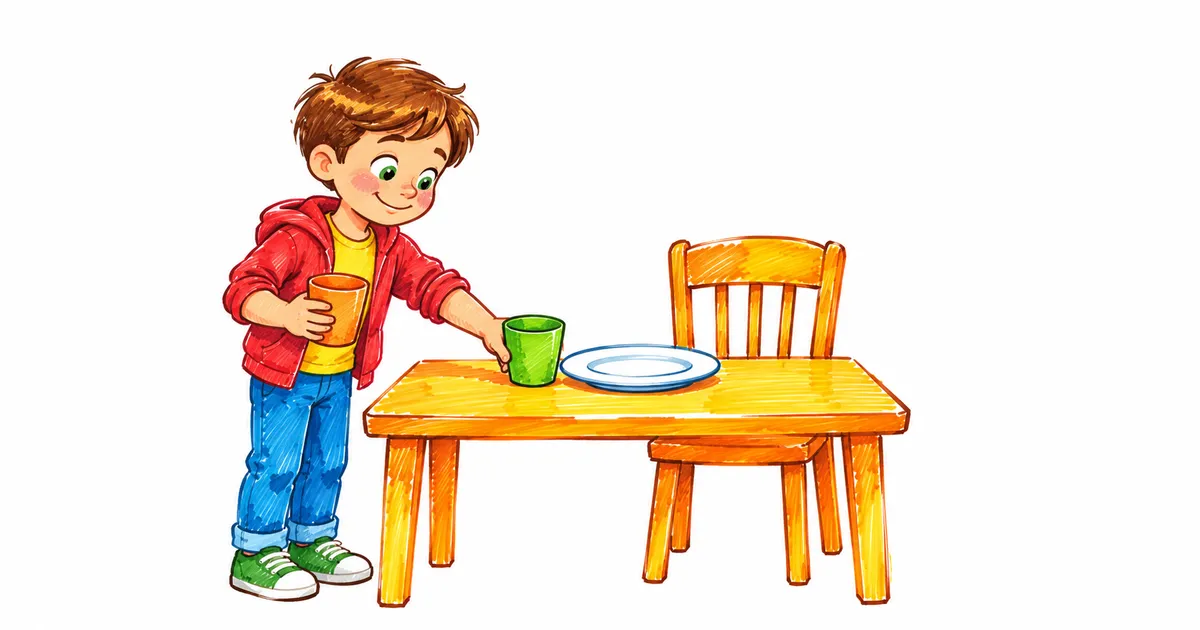
A phrasal verb with pick joins the verb to a particle such as up or out, creating a new meaning. Phrasal Verbs with “Pick” for Kids: A Practical Guide explains core combinations, word order, and context clues. Begin with pick up and pick out, then add pick on and pick at. Link each expression to an action or sentence.
What Children Need to Understand First
The verb pick means choose or take. A particle changes the meaning: a child who picks a book chooses one, while a child who picks up a book lifts it. The particle completes the expression.
Some combinations carry multiple meanings. Pick up can mean lift, collect, or learn through exposure: “Pick up your pencil,” “We will pick you up after class,” and “She learns new words from the song.” Context identifies the intended meaning.
Use Phrasal Verbs with “Pick” for Kids: A Practical Guide as a short reference. Practise two expressions at a time. Older learners can compare meanings and identify the context clues.
How the Word Order Works
Pick up and pick out are separable. A noun can take either position: “Pick up the blocks” or “Pick the blocks up.” A pronoun must go in the middle: “Pick them up,” not “Pick up them.”
Other combinations stay together: “Do not pick on your brother,” “The child was picking at the rice,” and “We were searching through the craft box.” Their objects follow the complete expression. Moving an object into the middle creates an incorrect sentence.
The rule in Phrasal Verbs with “Pick” for Kids: A Practical Guide has three steps: identify the expression, check whether it separates, and identify a noun or pronoun object. The verb changes for tense—pick, picks, picked, or picking—while the particle remains unchanged.
The Meanings Children Will Use Most
The table contrasts six combinations. Start with concrete meanings such as lifting and choosing. Add social or figurative meanings after the child can picture and explain the situation.
One routine can show different meanings. A child may pick out a puzzle, pick it up, then pick through its pieces. The sequence separates the expressions in memory.
Using Context to Choose the Right Meaning
Check what happens before and after the phrasal verb. In “She picks up Spanish words while playing,” the word words signals that the expression means absorbing language through listening and use. In “She gathers the cards,” cards names physical objects, so the equivalent meaning is lift.
After reading Phrasal Verbs with “Pick” for Kids: A Practical Guide, ask your child to name the clue, not just the answer. Prompt: “Which words helped you decide?” Explaining the clue develops careful reading and limits guessing.
Choose the Meaning
Explain what pick up means in each sentence.
1. “Please pick up the socks.”
2. “We will pick up your cousin at the station.”
3. “Your child may pick up phrases from a cartoon.”
Answers: 1. lift; 2. collect; 3. learn through exposure.
Common Mistakes and Simple Fixes
One error treats the particle as optional. “Please pick your toys” means choose them; “Please pick up your toys” means lift and tidy them. Practise the complete expression instead of pick alone.
Pronoun placement causes another mistake. Children may say “Pick up it” after hearing “Pick up the bag.” Compare the forms: “Pick up the bag” becomes “Pick it up.” Likewise, “Pick out a card” becomes “Pick it out.”
Children may confuse pick someone with pick on someone. The first means choose that person. The second describes repeated unkind treatment, not neutral selection. Direct comparison prevents an unintended message.
Put the Pronoun in the Right Place
Rewrite each sentence with the pronoun in brackets.
1. “Pick up the pencils.” (them)
2. “Pick out the red scarf.” (it)
3. “Do not pick on your classmates.” (them)
Answers: 1. “Pick them up.” 2. “Pick it out.” 3. “Do not pick on them.”
Practice That Fits Everyday Routines
Use objects before worksheets. Place three safe household items on a table. Ask your child to pick out one by colour, then pick it up. Hide a small card among larger pieces and ask the child to pick through them. Each action demonstrates the particle.
Keep Phrasal Verbs with “Pick” for Kids: A Practical Guide nearby during the first practice sessions. Request a new sentence after your child matches the expression to an action. Multilingual children can compare meanings across languages, but practise English word order.
Across 1-on-1 online lessons, our LearnLink tutors can practise one meaning through pictures, movement, and short questions before adding another. At home, run a two-minute review: give a command, request an example, and finish with a pronoun sentence.
Complete the Sentences
Use pick up, pick out, pick on, pick at, or pick through. Change the tense if needed.
1. Please ______ your cup.
2. Can you ______ the picture with three birds?
3. We ______ the shells to find a smooth one.
4. The child was not hungry and ______ the meal.
5. Nobody should ______ another child.
Answers: 1. pick up; 2. pick out; 3. picked through; 4. picked at; 5. pick on.
For the rule wording, Wikipedia — English Grammar is a useful reference while the practice examples here stay adapted for children.
Frequently Asked Questions
How Many Phrasal Verbs with “Pick” Should My Child Learn at Once?
Start with two expressions: pick up and pick out. Practise actions and short sentences until your child selects the right one independently. Add one expression while reviewing the first pair. A small active set beats a context-free list.
Why Does “Pick up” Have Several Meanings?
Everyday use gives phrasal verbs multiple meanings. Pick up can describe lifting an object, collecting someone, or learning through exposure. Teach one meaning in a specific situation, then compare another sentence and identify its context clue.
When Must a Pronoun Go in the Middle?
With separable expressions such as pick up and pick out, an object pronoun goes between the verb and particle: “pick it up” and “pick them out.” A noun can take either position. With inseparable pick on and pick at, the pronoun follows the particle.
Can Multilingual Children Compare These Expressions Across Languages?
Yes. Another language may express the same idea with one verb, multiple words, or a different pattern. Keep comparisons brief, then practise the complete English expression. Accurate English meaning and word order matter more than a word-for-word match.
What Is the Best Way to Review These Phrasal Verbs?
Phrasal Verbs with “Pick” for Kids: A Practical Guide supports short, repeated practice. Ask your child to act out one expression, complete one sentence, and explain one context clue. Revisit the items on different days. Add another meaning once the child understands and uses the current set.
Start your child's English journey today — book a trial lesson with LearnLink.
Stay updated on our latest tips and resources by following us on Instagram LearnLink.