Gym and Exercise Vocabulary for Kids
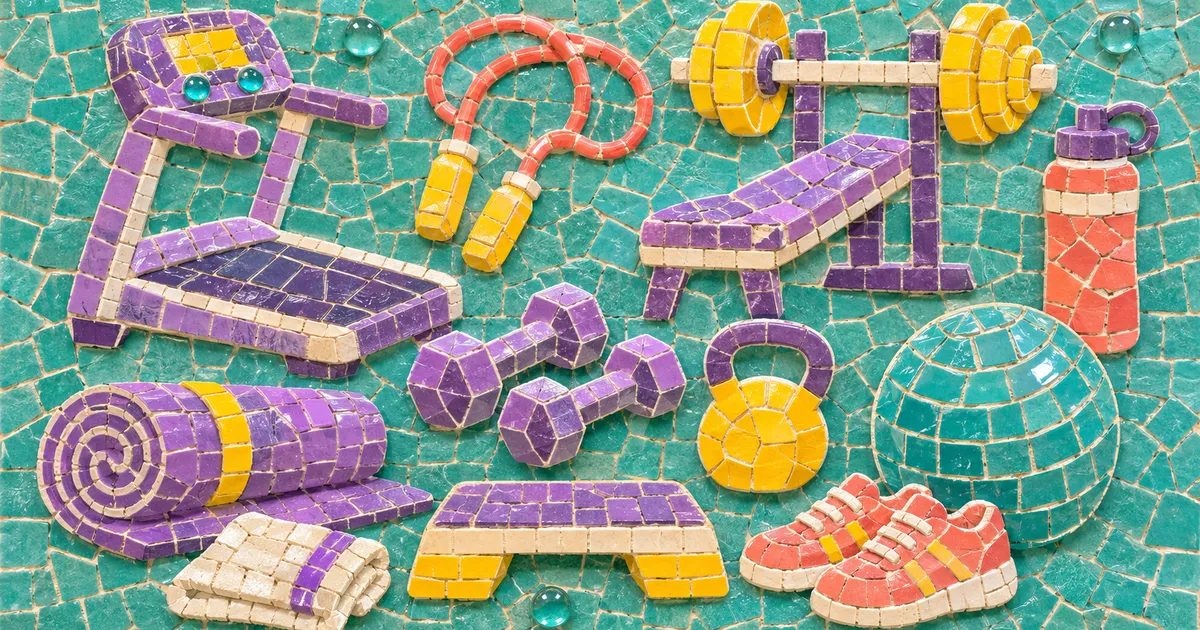
Gym and exercise vocabulary covers action verbs, body words, equipment, and instructions for physical activity. This guide to Gym and Exercise Vocabulary in English: Words and Activities for Kids gives your child practical words, examples, and home or lesson games. Start with visible actions such as “jump,” “bend,” and “beanbag.” Movement shows meaning without lengthy explanations. Then combine familiar words into phrases: “Catch it,” “Stretch your arms,” or “Can you balance on one foot?”
Core Movement and Equipment Vocabulary
Teach action words first because children can demonstrate each meaning. Say the word, model the movement, and ask your child to copy it. Introduce one form at a time: “jump,” then “Jump three times.” The table pairs core movements and equipment with ready-to-use examples.
Teach related groups: movements, equipment, then directions such as “left,” “right,” “forward,” and “back.” In Gym and Exercise Vocabulary in English: Words and Activities for Kids, “gym” can mean an exercise room, sports building, or school physical education class. Context identifies the meaning.
Useful Phrases in Context
Short instructions connect grammar with action. Begin with one step: “Touch your toes.” Then link two steps with “and”: “Pick up the object and throw it.” Older or more confident learners can follow “first,” “next,” and “finally”: “First, stand on the mat. Next, do five jumps. Finally, take a short rest.”
Add phrases for participation, not just commands: “It’s my turn,” “Pass it to me, please,” “How many should I do?” and “Can you show me again?” Include effort and body signals: “I need a break,” “My legs are tired,” and “That feels too difficult.” Precise communication supports safe exercise.
Gym and Exercise Vocabulary in English: Words and Activities for Kids works best when children answer and act. Ask, “What are you doing?” and prompt “I’m jumping” or “I’m stretching my legs.” Across LearnLink lessonsAcross LearnLink lessons, our tutors help children build confident, everyday English step by step.
Activities for Different Ages
School-age kids: Play an action-and-point game with three to five words. Place a beanbag, mat, and hoop within sight. Give one instruction, such as “Touch the hoop” or “Sit on the mat.” After several turns, let your child lead. Accept gestures first, then model the full phrase without making the game a test.
School-age kids: Build a movement trail: jump over a line, walk around a chair, and throw a soft object into a basket. Say each step, then ask your child to repeat the route. These activities connect Gym and Exercise Vocabulary in English: Words and Activities for Kids with objects, positions, and actions instead of isolated translation.
School-age kids: Ask learners to design a short circuit or warm-up in English. They can write six instructions, select safe household equipment, and explain the order. Advanced learners can add time, repetition, and comparison: “Hold this position for ten seconds,” “Do two more,” or “This exercise is easier than the last one.” Remove obstacles and choose age-appropriate movements.
Simple Ways to Practise at Home
Reuse words in new tasks instead of presenting one long list. Play “copy me,” sort words into actions and objects, or ask your child to describe a familiar game and lead a two-minute warm-up. For drawing practice, sketch a figure bending, jumping, or reaching and label the movement in English.
Build an Exercise Sequence
Choose four verbs from the table. Your child orders them and gives an instruction for each: “First, march in place. Next, bend your knees. Then, jump twice. Finally, stretch your arms.” Follow the sequence, then swap roles.
For an extra challenge, change one detail but keep the action: jump forward, jump slowly, or jump over a rope. The routine practises verbs, directions, and adverbs.
Correct lightly during active play. If your child says “I jumping,” reply, “Yes, you’re jumping,” and continue. Afterward, review two or three phrases needing practice. The child hears the correct model without stopping every attempt to speak.
Common Vocabulary and Grammar Mistakes
Gym phrases may not translate word for word. English uses “do” with exercises, “play” with team games, and “go” with activities ending in “-ing.” Regional spelling differs: “practise” is the British verb, while American English uses “practice” as both noun and verb.
Do not require every rule before speaking. Contrast two phrases, act them out, and revisit them later. When multiple forms are correct, choose one model for the activity and explain alternatives as they appear. Consistency supports beginners; flexibility matters as reading and listening skills grow.
- Try asking your six-year-old to name five exercises using picture cards.
- Practice saying “I do squats” instead of “I make squats” together.
- Use toy figures to model “He runs” and “They run” correctly.
- Correct one mistake gently, then repeat the complete sentence three times.
- Play a two-minute matching game pairing gym words with exercise actions.
When a word has several meanings or pronunciations, Cambridge Dictionary is a useful check before turning it into child-friendly examples.
Frequently Asked Questions
How Many Gym and Exercise Words Should My Child Learn at Once?
For Gym and Exercise Vocabulary in English: Words and Activities for Kids, start with three to five new items for younger beginners and five to eight for older learners. The right number depends on whether your child understands and uses each word. Add items when the current set appears in full instructions or answers, not when your child merely repeats a list.
Should My Child Learn Single Words or Complete Phrases?
Use both, then move quickly toward phrases. “Ball” identifies an object; “Throw the ball” shows how the noun works with a verb. Phrases prepare children to follow lessons, join games, and request help. Teach one stable phrase, then change one part: “throw the ball,” “catch the ball,” and “kick the ball.”
What Should I Do If My Child Mixes Languages?
Language mixing is normal in multilingual families and needs no sharp correction. Respond to the meaning, then give a natural English model. If your child uses another language for “rope,” say, “Yes, pick up the rope,” and continue. Repetition makes the English word easier to retrieve. Do not demand an apology or a full restart.
How Can We Practise Without Gym Equipment?
Use safe household objects. Rolled socks can become a soft ball, a towel can mark a mat, and two books can mark start and finish lines. Some actions need no equipment: stretch, bend, twist, balance, march, and hop. Keep open floor space, remove breakable objects, and match movements to your child’s age and needs.
- Start with three to five words and model each action.
- Practise the words in short instructions, then swap roles.
- Try the same vocabulary again in a new game or routine.
If your child needs steady speaking practice, start small — choose a trial lesson.
Stay updated on our latest tips and resources by following us on Instagram LearnLink.