Magic E Words for Kids: A Practical Guide
Magic E Words for Kids: A Practical Guide shows how silent final e changes a short vowel into a long one: cap becomes cape, and hop becomes hope. Children meet this pattern while reading and spelling one-syllable words. Exceptions such as have and give require separate teaching.
What Children Need to Understand
Magic e is a phonics and spelling pattern, not a grammar tense. In cake, the final e is silent and the a has its long sound. Compare it with the short a in cap.
Children must inspect the whole word. Teach them to find the vowel, notice the following consonant, check for final e, then blend from left to right.
Magic E Words for Kids: A Practical Guide suits children who can hear short vowels in kit, hop, and cub. If they struggle, practise matching sounds to letters before teaching silent e.
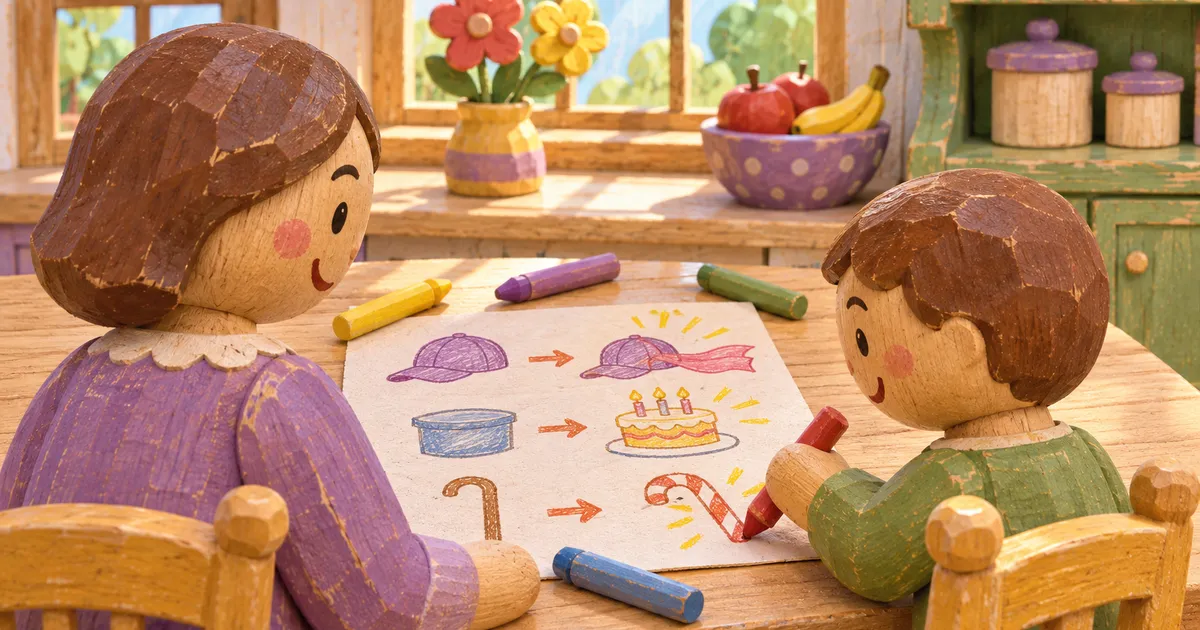
Children often need to see that the final e changes the first vowel without making a sound of its own. Use three contrasting pairs at a time, such as cap/cape, kit/kite, and hop/hope. Ask the child to underline the vowel, circle the final e, draw an arrow back to the vowel, and read both words aloud. This visual routine makes the change explicit while keeping blending central.
A common mistake is to pronounce the final e, producing two syllables in a word such as home. Another is to assume that every word ending in e follows the pattern. Explain that words such as have, give, and come are exceptions and should be learned separately. During practice, mix six regular examples with two exceptions. Ask, “Does the vowel say its name?” rather than telling the answer, then have the child sort each word into “magic e” or “not magic e.”
How the Silent E Pattern Works
The usual structure is VCe: a vowel, one consonant, and final e. The ending stays silent while the first vowel takes its long sound. In bike, the i sounds like its letter name.
Compare pairs aloud: tap–tape, pet–Pete, rid–ride, hop–hope, and cut–cute. Say the first word, add e, and read the new word. Children should hear and see the change.
Magic E Words for Kids: A Practical Guide presents final e as a spelling signal. Playful language can introduce the pattern, but precise explanations help older children and multilingual learners decode unfamiliar words.
For children, practise five word pairs at a time. Write the short-vowel word on a card, then add a separate e card. Ask the child to mark the first vowel with a dot, draw an arrow from final e back to it, and read both forms aloud. Keep the consonant sound unchanged: cap becomes cape, not “cap-ee.” Repeat each pair twice and then shuffle the cards.
A common mistake is assuming every word ending in e follows the pattern. Contrast a regular example with an exception: hope has a long o, but have does not. Explain that VCe usually has one consonant between the vowels; edge, give, and horse need separate attention. If a child reads kite as “kit,” pause before correcting, point to the final e, and ask, “What job is this e doing?” The prompt encourages self-correction and attention to the spelling cue.
Rules and Examples to Learn First
Begin with words that follow the pattern clearly. Read the base word, add e, and compare both sounds. Accents may change the pronunciation of long u, but not the spelling pattern.
The e–consonant–e pattern appears less often in one-syllable words. Children may encounter these and theme, but should first master the a_e, i_e, o_e, and u_e groups.
After mastering single words, read examples from Magic E Words for Kids: A Practical Guide in phrases: a red cape, ride a bike, a note from home, and a cute cube. Phrases connect decoding with meaning.
Common Mistakes and Useful Exceptions
The biggest mistake is treating every final e as magic. In have, give, love, come, some, and done, the earlier vowel keeps another sound. Teach these words as exceptions.
Final e has other jobs. It prevents words such as have and give from ending in v. It helps c or g take a soft sound in race and huge.
Children may add an extra syllable to make. Cover the final letter, read mak, uncover the e, then read make as one unit. Practise this contrast before expanding the word set.
Practice Activities at Home or in Lessons
Ask one question: does final e change the vowel, or is the word an exception? Revisit Magic E Words for Kids: A Practical Guide in five-minute sessions.
Add E and Read the New Word
Change each word by adding a final e: cap, kit, hop, tub, mad, rid.
Answers: cape, kite, hope, tube, made, ride. Ask your child to underline the vowel that changed and cross out the silent e lightly.
Mix regular examples with exceptions. The task reveals whether your child reads the whole word or applies the pattern automatically.
Sort the Words
Put these words into two groups: “vowel changes” and “exception”: cake, have, bike, give, home, love, cube, some.
Answers: vowel changes — cake, bike, home, cube; exceptions — have, give, love, some.
Choose two regular words and one exception for a spoken sentence: “I hope to ride home,” or “I love this game.” For spelling, say the sentence once, let your child write it, then check the target words together.
A Simple Teaching Plan for Different Ages
For children, build cap with letter cards, read it, then add e to make cape. Practise two or three pairs per session. Moving and reading the letters makes the pattern concrete.
Children aged 8–10 can sort patterns, mark long vowels, and write short sentences. Older learners can examine why have and give break the expected pattern, especially when they read more than one language.
LearnLink tutors follow this sequence: hear the contrast, inspect the spelling, blend the word, and use it in context. Magic E Words for Kids: A Practical Guide supports home practice. Advance when your child can explain the pattern.
When a word has several meanings or pronunciations, Cambridge Dictionary is a useful check before turning it into child-friendly examples.
Frequently Asked Questions
What Is the Easiest Way to Explain Magic E?
Say that silent final e can make an earlier vowel say its letter name. Demonstrate cap–cape and let your child hear both words. Magic E Words for Kids: A Practical Guide then introduces other patterns and exceptions.
At What Age Should a Child Learn Magic E Words?
There is no fixed age. Children usually meet the pattern after reading short-vowel words in the early primary years. Readiness matters more than age. A child should blend cap, kit, and hop before comparing them with cape, kite, and hope.
Why Does the Rule Not Work in Have or Give?
Final e performs different spelling jobs. In have and give, it prevents the written word from ending in v; it does not lengthen the earlier vowel. Teach both words as exceptions to a frequent, not absolute, pattern.
What Should I Do If My Child Keeps Forgetting the Silent E?
Return to matched pairs with fewer words. Write hop, read it, add e, and read hope. Ask what changed in the spelling and sound. Repeat another day, then use the word in a short phrase.
If your child needs steady speaking practice, start small — choose a trial lesson.
Stay updated on our latest tips and resources by following us on Instagram LearnLink.