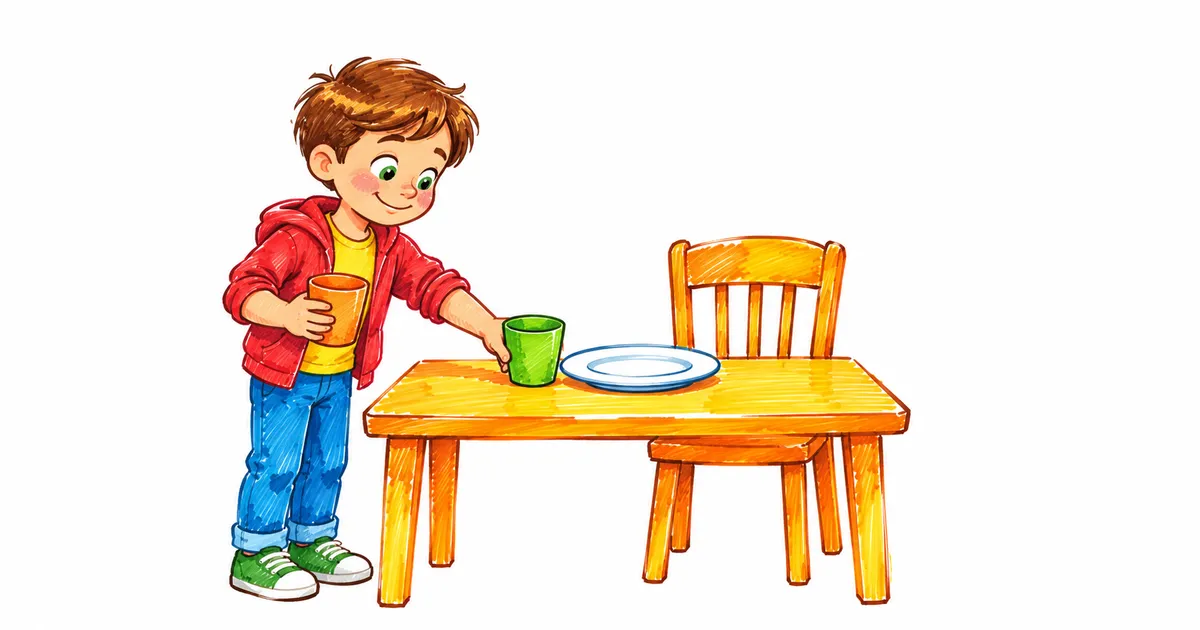
Negative Sentences for Kids: A Practical Guide
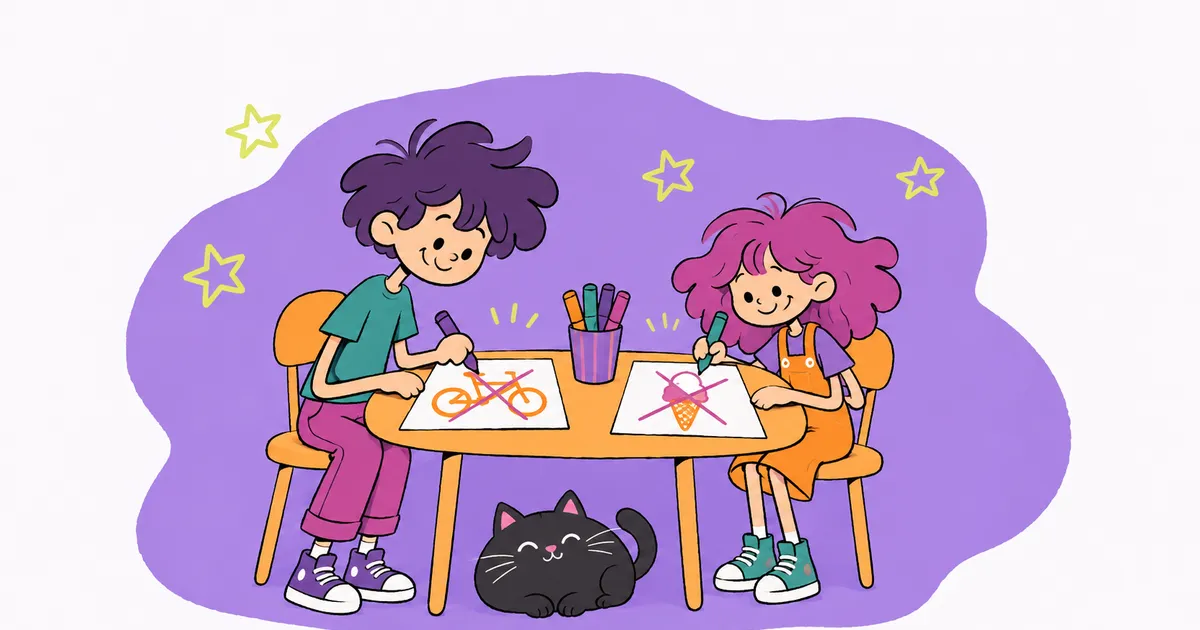
Negative sentences deny facts, actions, or permission. Negative Sentences for Kids: A Practical Guide explains correct not placement and when helper verbs change the verb. Compare “She is ready” with “She is not ready,” then practise “He does not play” and “We did not go.” Children learn each pattern, say it aloud, then build meaningful sentences.
What a Negative Sentence Tells US
Positive sentences affirm facts or actions: “The door is open” or “They walk to school.” Negatives reverse meaning: “The door is not open” and “They do not walk to school.” Verb type controls not placement.
Negative Sentences for Kids: A Practical Guide begins with meaning. Compare paired facts or actions: one toy is red; another is not red. A child can swim; a baby cannot swim. Direct contrasts reveal grammar clearly.
Avoid word-for-word translation with multilingual children. Other languages may change word order or use two negative words. Teach complete English frames such as “does not + base verb”; not cannot sit anywhere.
How Negative Grammar Works
Place not directly after be: “I am not tired,” “She is not at home,” and “They were not late.” Modals follow this pattern: “You cannot enter,” “We should not shout,” and “He will not forget.” Neither pattern needs do.
Other verbs need present- or past-tense helpers. Choose do not or does not for present tense; choose did not for past tense. Keep the following verb in its base form: “She does not like peas,” not “She does not likes peas.”
Read each row as a frame, then replace one element: “We did not watch the film” becomes “We did not watch the match” or “We did not finish the game.” This substitution drill strengthens Negative Sentences for Kids: A Practical Guide.
Core Rules with Clear Examples
Use do not with I, you, we, and they: “I do not know,” “You do not need a coat,” and “They do not live nearby.” Use does not with he, she, and it: “It does not work.” Negative Sentences for Kids: A Practical Guide reinforces English-helper link.
Every subject takes did not in past tense: “I did not call,” “She did not call,” and “They did not call.” Because did already marks past tense, the next verb returns to its base form. Write “He did not go,” not “He did not went.”
Speech and informal writing often use contractions use contractions: don’t, doesn’t, and didn’t. With be, children encounter isn’t, aren’t, wasn’t, and weren’t. Teach every full form beside its contraction.
Common Mistakes and How to Fix Them
Children may place not before an ordinary verb: “She not plays tennis.” Add the missing helper and rebuild three parts: she + does not + play. Short pauses help children hear this structure.
Another error marks the verb twice: “He doesn’t likes it” or “We didn’t played.” Remove the extra ending. Does marks present tense; did marks past tense. The next verb stays plain: like, play, go, or see.
Children may write two negatives: “I don’t have no pencil.” Standard school English uses “I don’t have a pencil” or “I don’t have any pencils.” Negative Sentences for Kids: A Practical Guide fixes errors by rebuilding patterns, not merely rejecting answers.
Practice Activities at Home
Connect brief practice with choices. Use Negative Sentences for Kids: A Practical Guide during five-minute rounds: read a positive sentence, choose its helper, then give its negative form. Ask your child to explain one choice.
Exercise 1: Add the Missing Word
Complete each sentence with not, do not, or does not: 1. The bag is ___ empty. 2. We ___ eat meat. 3. My sister ___ walk to school. 4. I am ___ cold. Answers: 1. not; 2. do not; 3. does not; 4. not.
Next, change each sentence. Check subject and tense, then use the base form after does not or did not.
Exercise 2: Make Each Sentence Negative
Change these sentences: 1. He likes loud music. 2. They visited the museum. 3. The water is warm. 4. We can stay late. Answers: 1. He does not like loud music. 2. They did not visit the museum. 3. The water is not warm. 4. We cannot stay late.
Finish with a meaning check: each answer must express its intended idea. Ask your child which word or helper creates the negative.
Exercise 3: Find and Fix the Mistake
Correct each sentence: 1. She don’t read comics. 2. We did not saw the bird. 3. They are not play outside. 4. It doesn’t opens. Answers: 1. She doesn’t read comics. 2. We did not see the bird. 3. They do not play outside. 4. It doesn’t open.
Choosing Practice by Age and Level
Younger children can start with spoken contrasts and be: “The cup is full. The cup is not empty.” Pictures, toys, and actions demonstrate meaning. Accept full forms before introducing contractions or written rules.
Children aged 8–10 can sort sentences into be, do/does, did, and modal groups. They can transform positive sentences and explain verb forms. Use family routines, school, games, food, and familiar places.
Older learners using Negative Sentences for Kids: A Practical Guide can compare formal and informal forms, correct double negatives in standard written English, and write dialogues. LearnLink tutors adjust sentence length and support while retaining each grammar pattern.
When a word has several meanings or pronunciations, Cambridge Dictionary is a useful check before turning it into child-friendly examples.
Frequently Asked Questions
When Should a Child Start Learning Negative Sentences?
Children can begin after understanding short positive statements. Pair “It is hot” with “It is not hot.” Negative Sentences for Kids: A Practical Guide introduces helper verbs step by step. Teach one tense at a time.
Why Do We Use Do or Does in Some Negative Sentences?
Most present-tense English verbs need do or does when forming negatives. Use do not with I, you, we, and they; use does not with he, she, and it. The following verb stays in its base form.
Should Children Use Contractions Such as Don’t and Isn’t?
Yes. Children need contractions in conversation and informal writing. Teach each beside its full form: don’t with do not, and isn’t with is not. Full forms suit emphasis and formal writing.
How Can I Tell Whether My Child Understands the Rule?
Ask your child to turn a positive sentence negative and explain each change. A secure answer chooses the correct helper, places not correctly, and keeps the base form after do, does, or did. Test unfamiliar examples, not memorised definitions.
A short one-to-one lesson can show what level and pace fit your child — book a trial English lesson.
Stay updated on our latest tips and resources by following us on Instagram LearnLink.